

VERONESE [1528-1588]
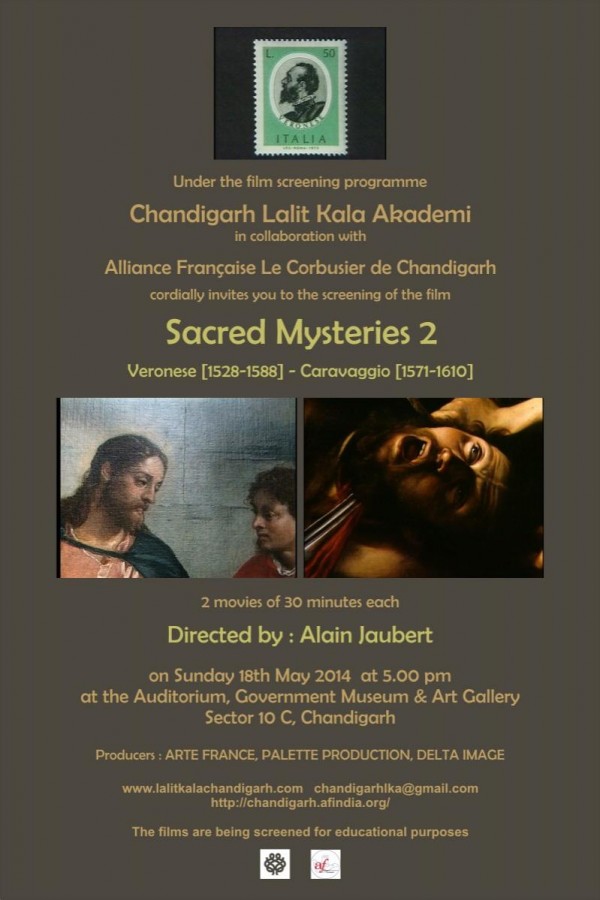
Un tableau en procès: "Le Repas chez Levi" (1573) Galleria dell'Accademia, Venice A painting that changes names: Veronese is brought before the tribunal of the Inquisition: the appearance of the famous "green Veronese"; a monk who cut the canvas into three pieces to save it from a fire. Here is the immense talent of Veronese, his guile,Coach Outlet his claim, to the rights of a creator to have an imagination.
AWARDS :
Award for the best educational film at the International Art Film Festival in Montréal, 1989 / Silver FIPA, 1989 / Award of the URTI creation documentary in Monte-Carlo, 1989 / Award for the best video art film at the Second International Art Film Biennial of Centre Georges-Pompidou, 1990
Le Caravaggio [1571-1610]
The St. Matthew Cycle, Caravaggio, 1600 (Church of San Luigi dei Francesi, Rome) In 1599, Caravaggio was hired to paint the two side walls of the Church of San Luigi dei Francesi, in Rome. He completed the task the following year. As the client had requested, the two side walls illustrate the calling and martyrdom of his patron saint, Matthew, one of the four Evangelists. On the left-hand wall is the "Calling": seven men in a dimly-lit room without depth - a scene from the Gospels in modern dress. On the far right, Christ has just entered and is pointing to Matthew. The attitudes and objects, the light, and the faces are all seen as part of a narrative unfolding in time. X-rays show that the painter changed his mind several times. On the right-hand wall is the "Martyrdom": the scene is even more complex, and contains thirteen figures - the executioner, witnesses, the victim, and the angel - in a arabesque composition which is one of the most impressive in the whole history of painting. X-rays show that the composition was originally quite different and that Caravaggio, who appears never to have made preliminary sketches, improvised directly onto the surface, working at astonishing speed.
